Story · Fredericksburg
164 years ago tomorrow morning, about sixty German settlers rode south from this part of the Hill Country trying to reach Mexico. Most of them did not make it.
I spent some time at our new property in Fredericksburg. Settlers Crossing. Eight historic structures, and three of them built by the same family — the Kusenbergers. I went in expecting to learn some dates. I came out with something else entirely.
The land was deeded in 1846 to Jack Hays, the Texas Ranger, the same year Fredericksburg was founded. By 1850 it belonged to Daniel Weiershausen, a Dillenburg man who had been in the settlement long enough to sign the December 1847 petition that created Gillespie County. How it came into Kusenberger hands after that I have not been able to trace.
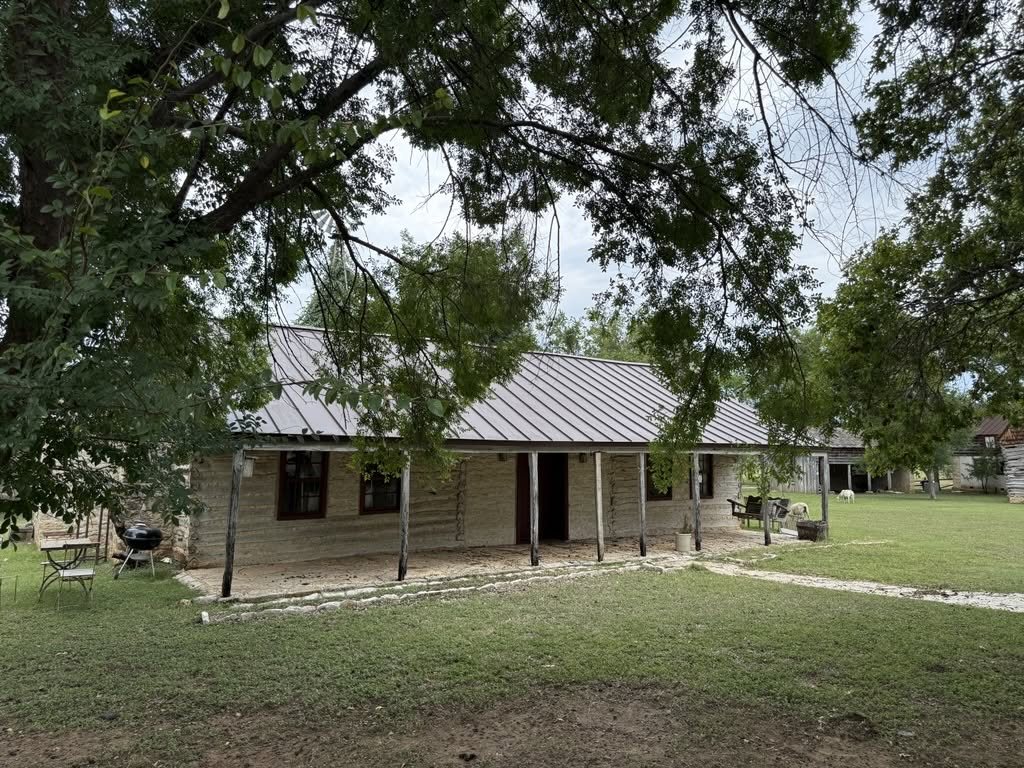
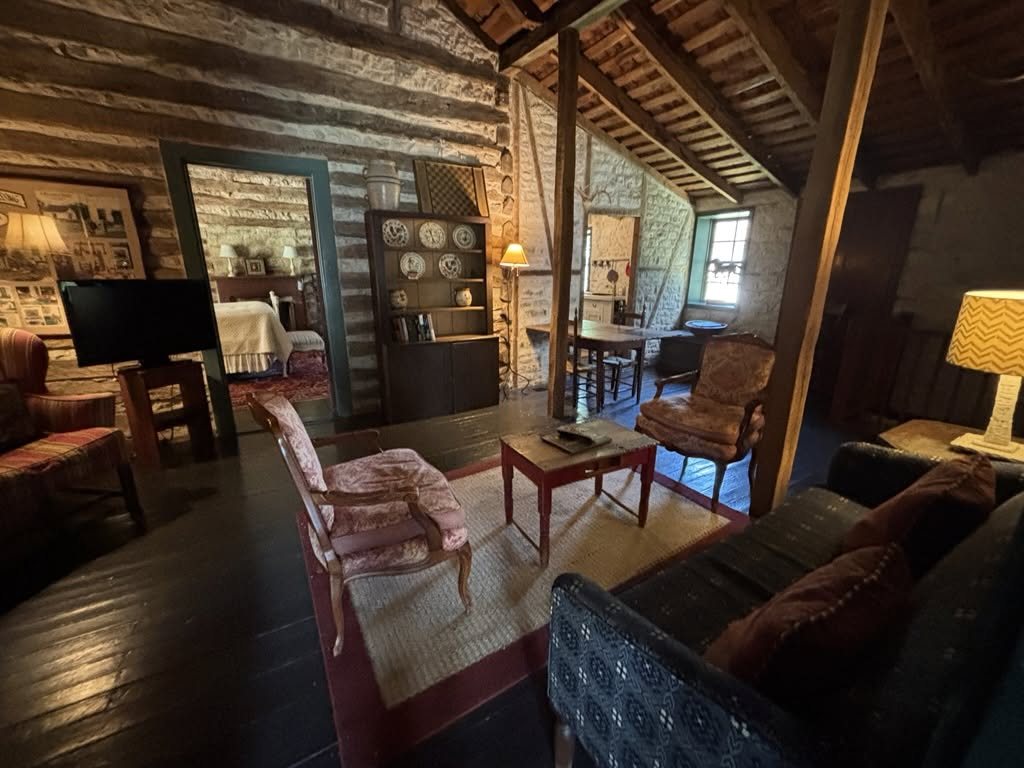
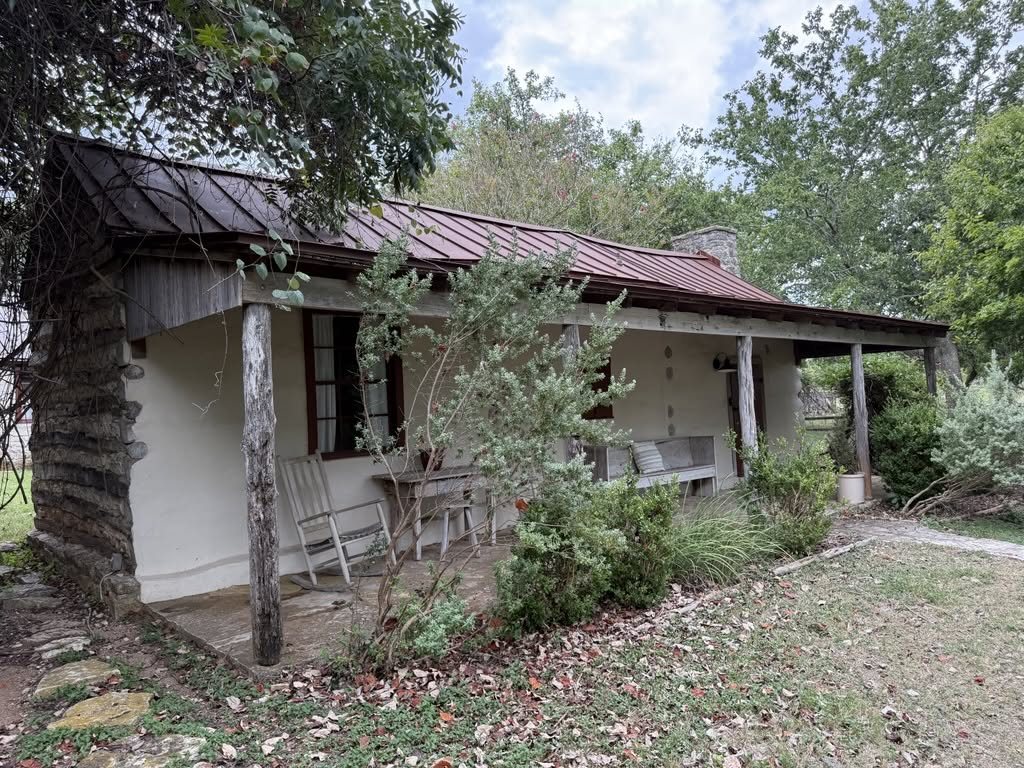
I have been in all three cabins. The oldest has hand-hewn logs and stone. The floors are the original stone, and they are not small — single slabs it would take three or four men to lift. Somebody quarried those, moved them, and set them by hand. They are still dead level.
The fireplace is big enough to be the whole point of the room, because it was. You duck through the doorways because they were not built for people our size.
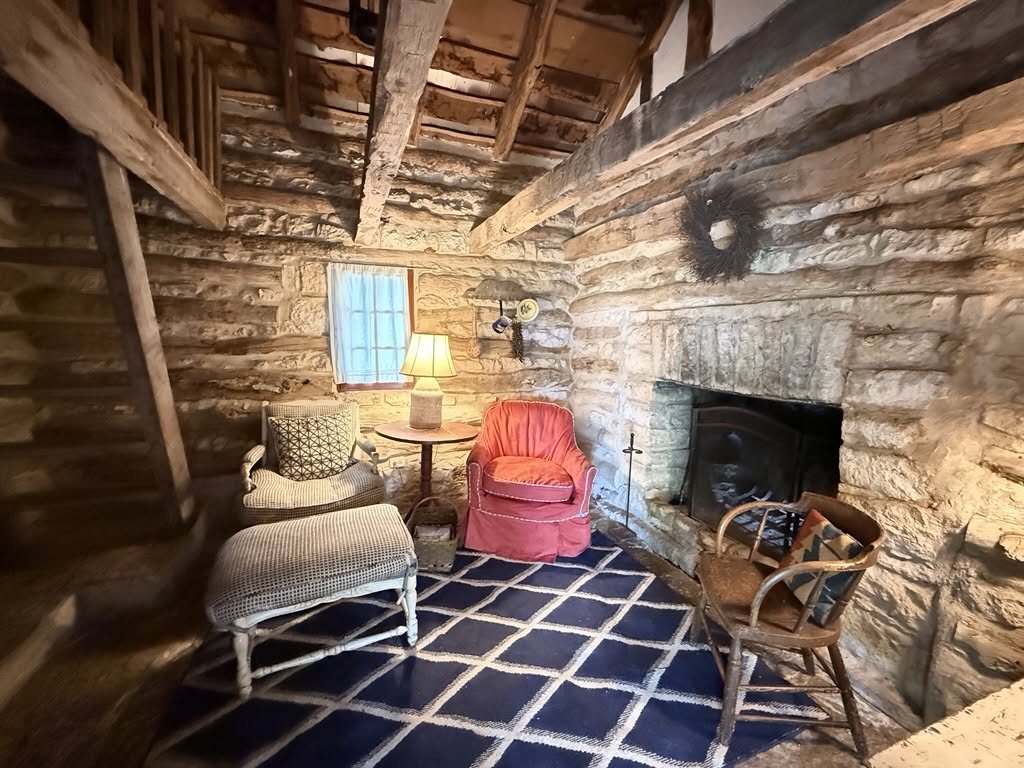
There was a second room the same size right beside it, and the two were connected by an open passage. One side for living, one for sleeping, is what I have been told. At some point that passage was enclosed, so what you see now reads as one building — but it started as two, with open air between them.
There is nothing defensive about any of it. No gun slots, no thick walls, no angles. It is a house somebody built to live in.
Remember that, because it does not stay that way.
In 1862 the Confederacy declared martial law in the Hill Country. Most of the Germans here had opposed secession and refused conscription. Some were hanged for it. About sixty decided to leave for Mexico, and Jacob Kusenberger was one of them.
Confederate forces hit the camp around three in the morning on August 10. Nineteen killed in the fight. Nine more executed where they lay wounded. They were treated as insurrectionists rather than soldiers, which is why the wounded were shot instead of taken prisoner. Eight more were run down and killed weeks later trying to cross the Rio Grande. The bodies at the Nueces were left where they fell for three years.
Jacob got out. Into the brush, into Mexico, and then into the Union Army — Company A, 1st Texas Cavalry. He enlisted on October 27, 1862, and served as a sergeant until the regiment mustered out in October 1865.
His wife Auguste was barely into her twenties. She was home with a five-year-old, a three-year-old, and an infant — their son Albert, born that same year. Active Comanche raids. Confederate martial law. A husband who was a known Unionist and gone. Three years of that, August 1862 to October 1865.
She did not leave.
Jacob came home in 1865. Two more structures went up on this ground around that same time.
The Pioneer Log Cabin is log and rock, and it went on to shelter four generations of the same family. It also has a basement, which I did not expect. Stone stairs going down into a room with walls thick enough to hold the temperature no matter what the day is doing.
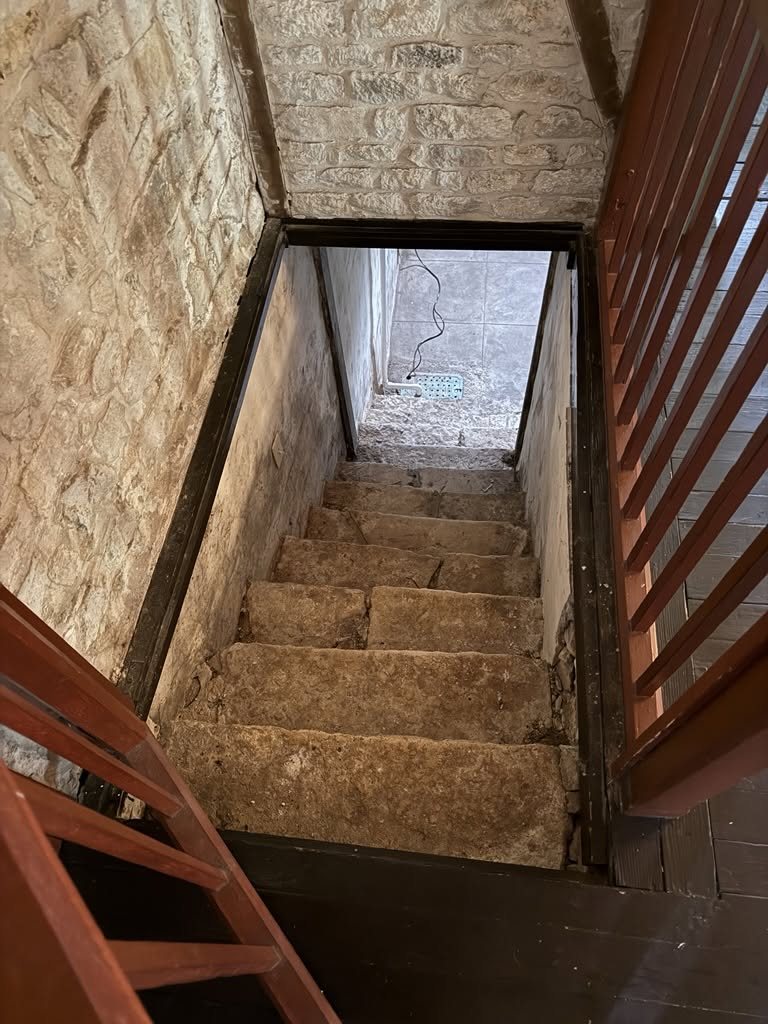
There are small openings near the ceiling, barred on the outside, cut so they slope down into the room. At first I thought they were defensive. They are not. They sit right at ground level outside, and they are angled to drop daylight onto the floor and let cold air fall in. Several of them, same design, more than one wall. That is a root cellar, built by people who understood that a hole in the ground keeps food through a Texas summer.
But I stood at the top of those stairs a good while, because the room is quiet in a way that gets your attention. The floor above is the original wood, and the handrails are modern — added later, for people like me. Take those out of your head and look at the opening itself. There is a lip cut into it — a ledge running underneath, old wood, sized for boards to sit down flush. That is not something that happens by accident. I could be wrong, but it looks to me like somebody built that stairwell to be covered. Lay the boards in and there is no basement, just floor, and you would walk over it and never know it was under you.
That is not what it was built for. It is only what it happens to be. A cold dark room under a house, at grade, with vents small enough that nothing gets through them and a floor that closes flush. Whether anyone ever needed it that way I do not know, and there is nobody left to ask.
The barn is two stories of native limestone with walls two feet thick, and it has gun slots. Not windows. Slots. They run all the way around the building except the one wall facing the two houses. Every direction a threat could come from, and none toward his family.
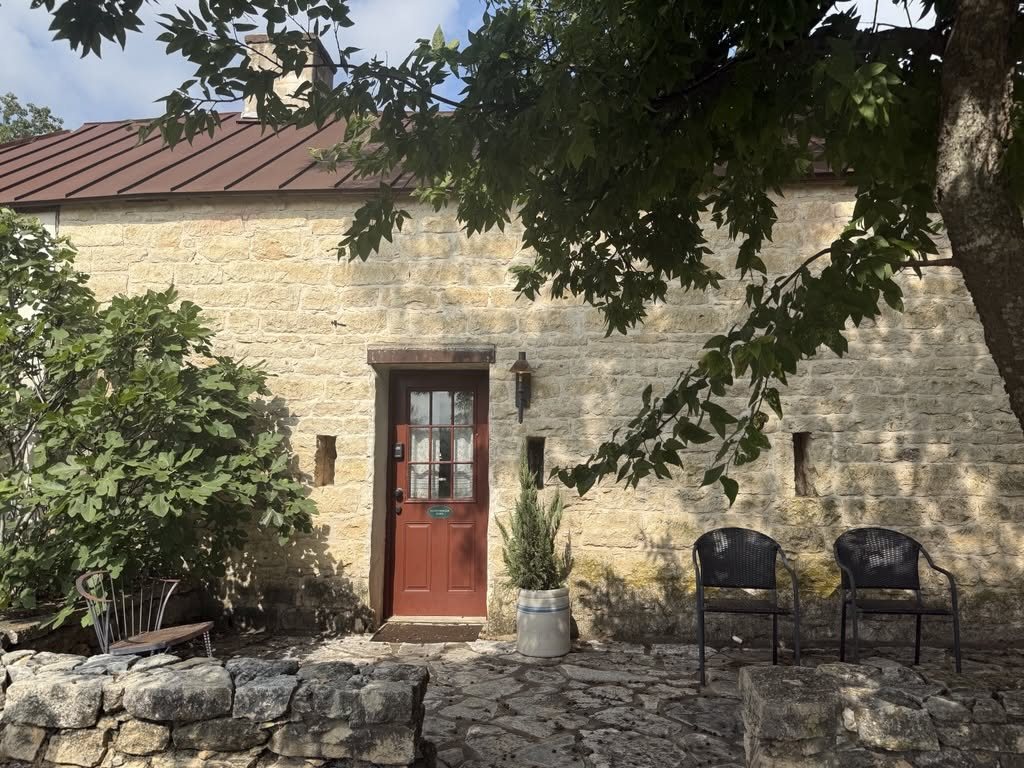
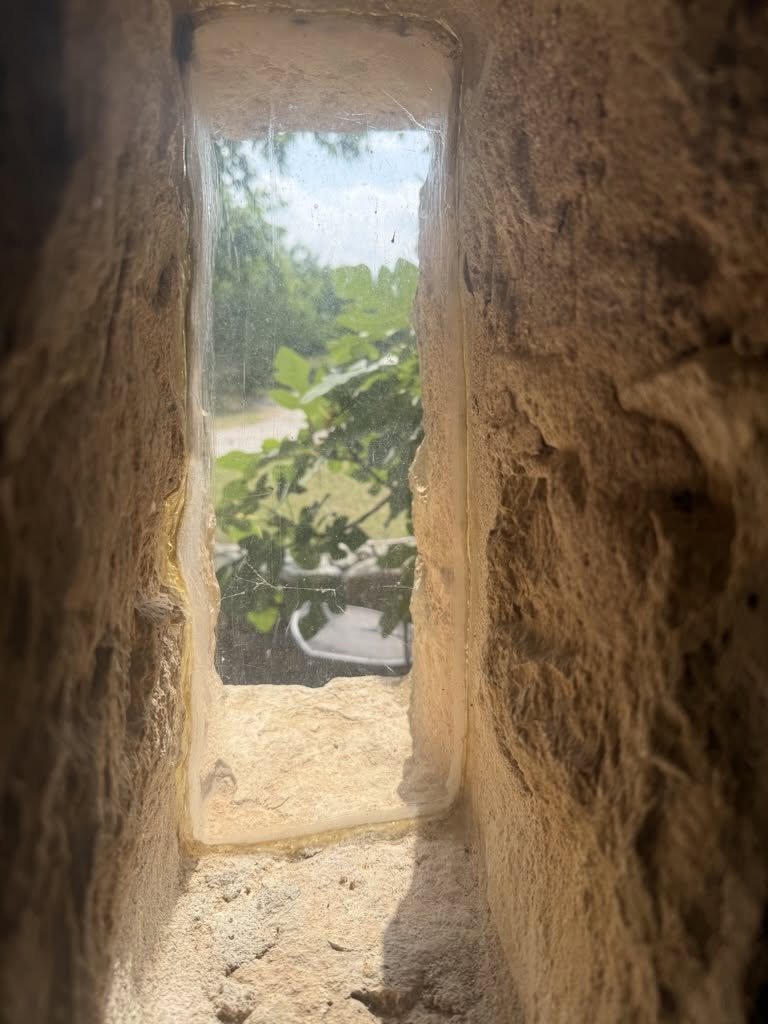
They sit at the height of a small man holding a rifle. About the same height as the doorways you duck through in the 1847 cabin. Those people were not tall. The slots were cut for them.
The 1847 cabin has a fireplace. The 1865 buildings have firing positions. Same family. Same ground. Eighteen years apart.
Something happened in between, and you can read it in the walls.
I sat in that first cabin the other day and just observed what was there. The fireplace, the beams, all of it original. A young family in the 1840s. A woman alone with three small children. A man coming back from that massacre and building something he could defend within sight of the house where his children were born.
The fencing tells its own story if you look close. There is a spot where three different eras are holding the same joint together. A square-shank nail, sheared from sheet iron and headed by hand — the kind that went into American buildings from the 1810s until wire nails took over in the 1880s. Beside it a round nail, which means somebody came back through sometime after that. And bright modern metal screw right next to both of them, from somebody who fixed it in living memory.
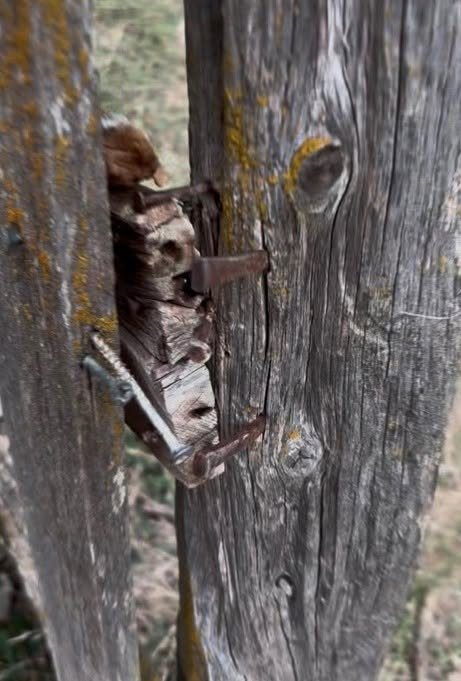
Nobody planned that. Three people, a century and a half apart, each walked this fence line, found the same weak spot, and put in whatever they had in their pocket. The wood is split and gray and it is still standing because none of them left it alone.
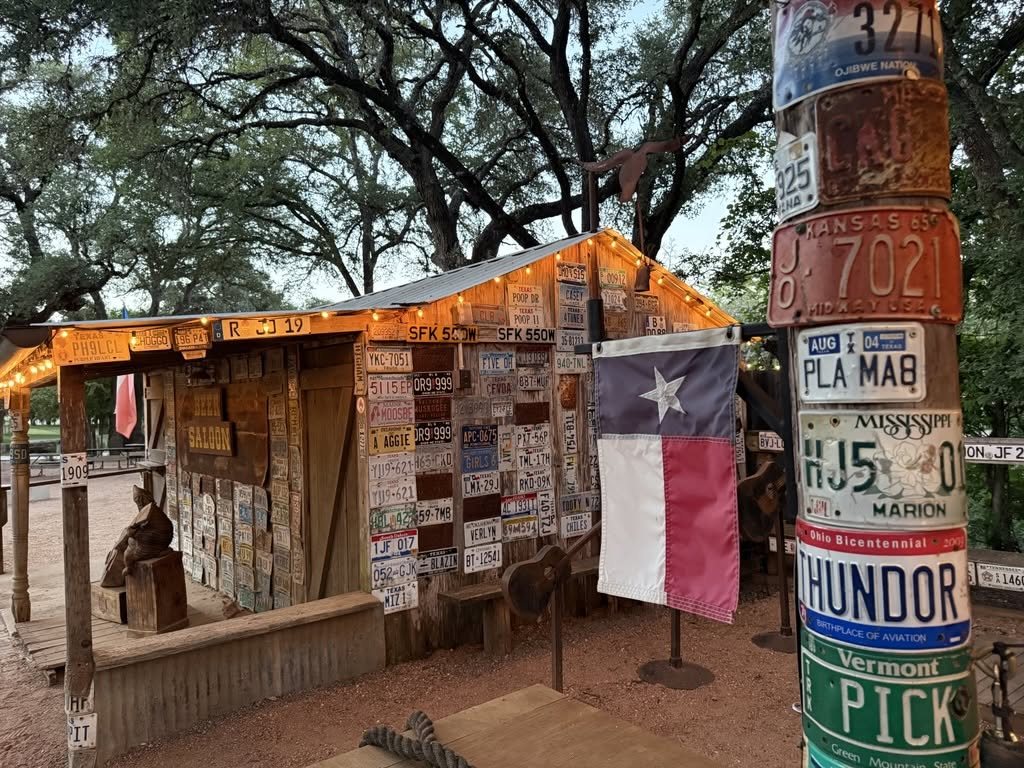
Jacob died in 1898. He is buried in the Kusenberger Family Cemetery near Luckenbach — private property, a few minutes from the dance hall everyone knows from the song.
There is another small cemetery right at the Luckenbach entrance, on your right as you pull in. Iron fence half fallen over, wildflowers, a handful of stones. It is the Schumann Cemetery.
Louis Krieger, August 23, 1846 to February 14, 1925. His stone says FATHER. Beside him is Johanne, and hers says only WIFE OF LOUIS KRIEGER. Krieger was born the year Fredericksburg was founded. He was fifteen when those men rode south. By the time the Confederacy dropped the draft age to seventeen, he was seventeen.
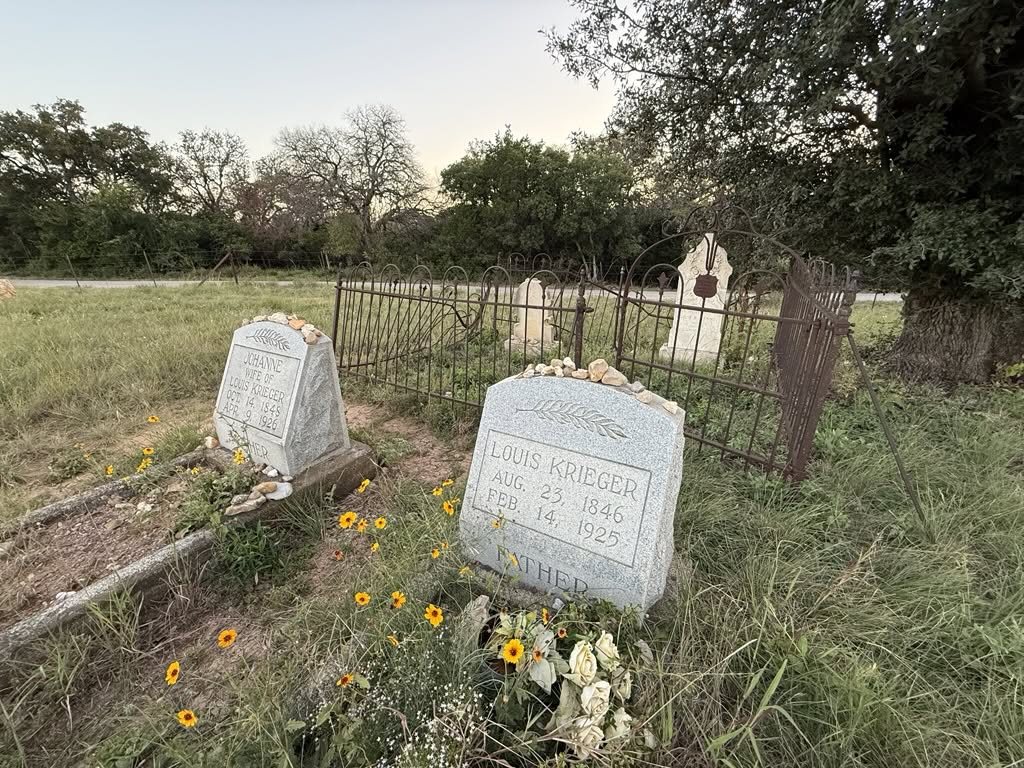
Behind them stands an older one, carved flowers across the top, the whole thing in German. Wilhelm Schumann. Geb. 25 Jan. 1822. Gest. 4 Sept. 1880. Along the bottom, Ruhe sanft. Rest gently. He was forty in the summer of 1862, just over the draft age. Six weeks after the Nueces the Confederacy raised the ceiling to forty-five, and he was under it. He stayed anyway. He is still there. The stone beside his is worn past reading.
Not Kusenbergers. Different families, same community, same years. The ones who stayed.
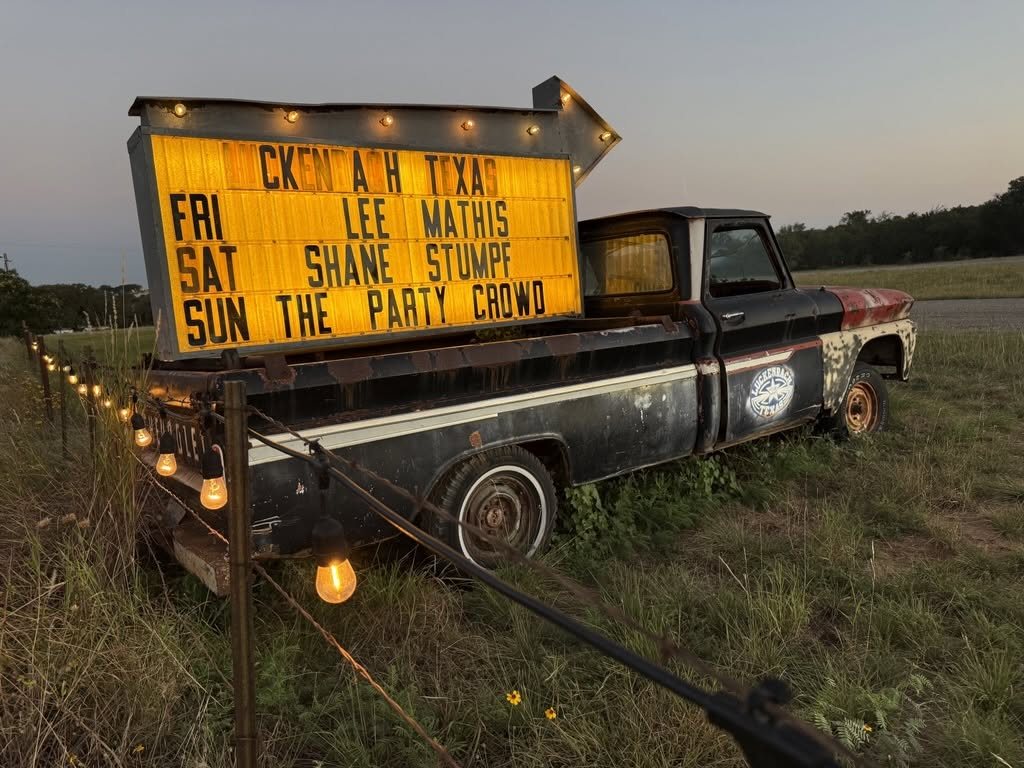
Just up the drive there is a rusted truck with the marquee in the bed and morning glory growing up through the dashboard. People stop for that truck. I watched them do it as I was walking the property. The stones are a hundred feet away and almost nobody turns around.
Half an hour south in Comfort is the Treue der Union Monument, with the names of the men who did not come home from the Nueces. Dedicated August 10, 1866. Four years to the day. The flag there flies at half-staff — not by federal order, but because the community decided it should, and it has for as long as anyone can remember.
It sits on High Street, a few blocks off 87. Most people drive through and never know it is there.
None of the Kusenberger structures are behind glass. Nothing at Settlers Crossing is roped off. You can stay in them. The gun slots are where he cut them and the stone floors are where they set them.
Once you know the story you cannot look at those walls the same way.
If you have a Kusenberger, a Krieger, or a Schumann in your family tree, I would genuinely like to hear from you. And if I have any of this wrong, tell me. I would rather be corrected than leave something inaccurate standing about people who cannot correct it themselves.
The people who lived this did not write it down. They built it, and it is still standing.
Go see it. Settlers Crossing and the history of the houses · Treue der Union Monument · Luckenbach