Story · Camp Verde
You’ve probably driven past Camp Verde a dozen times. So had I.
Highway 173 south of Kerrville is the kind of road that most people treat as a connector — something to get through on the way to somewhere else. They’re missing it.
Jess and I stopped there on Sunday, and I’ll admit I almost missed the best part.
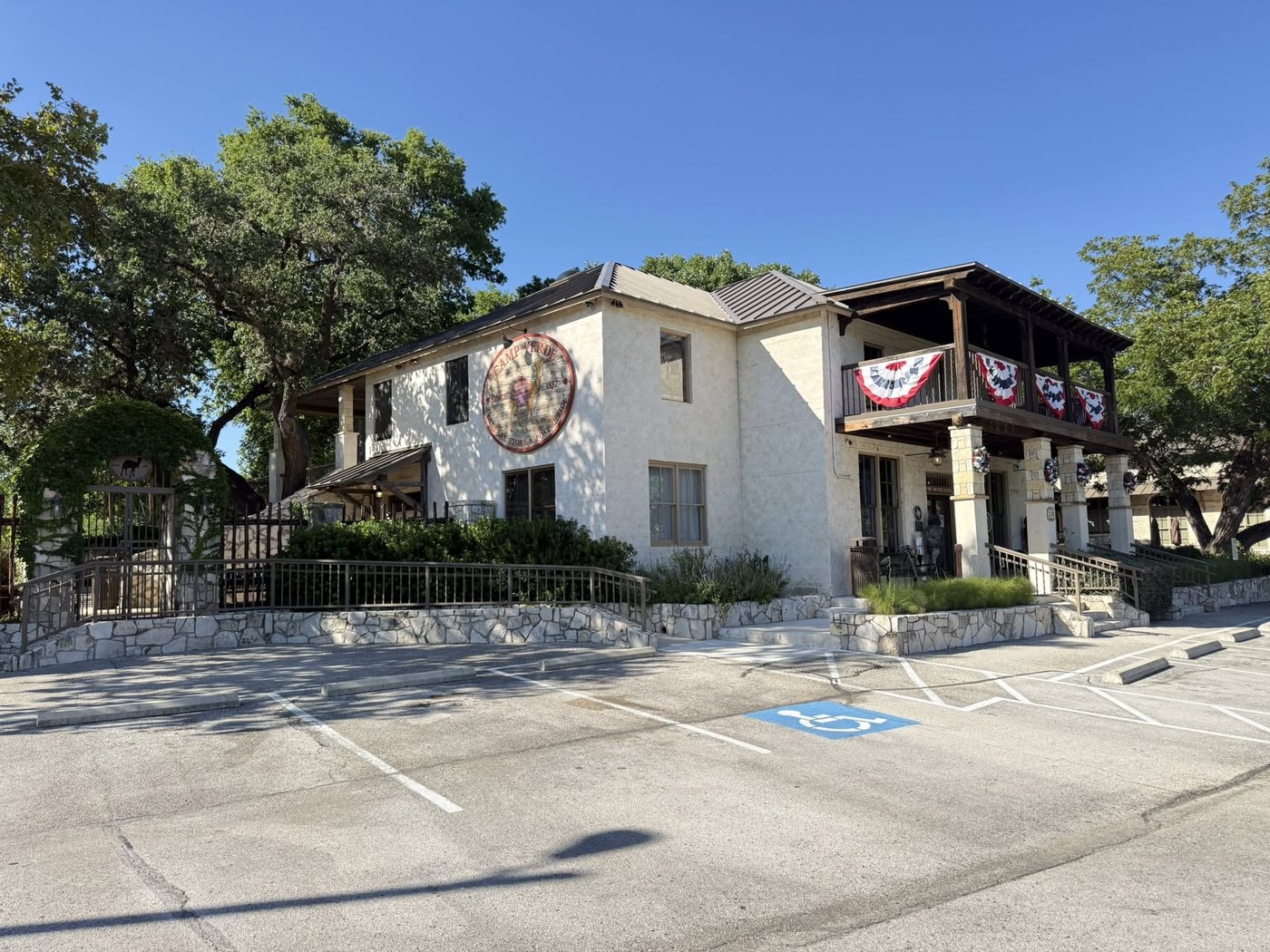
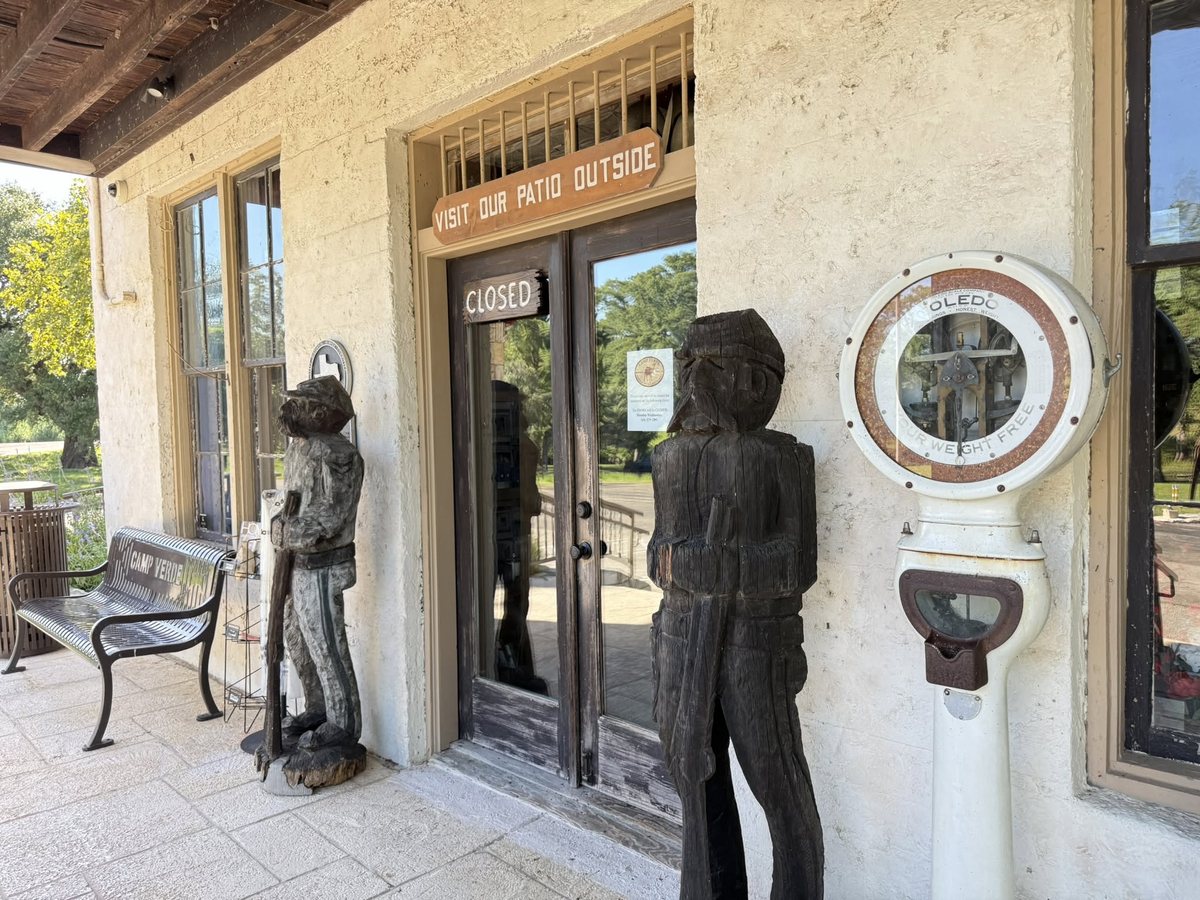
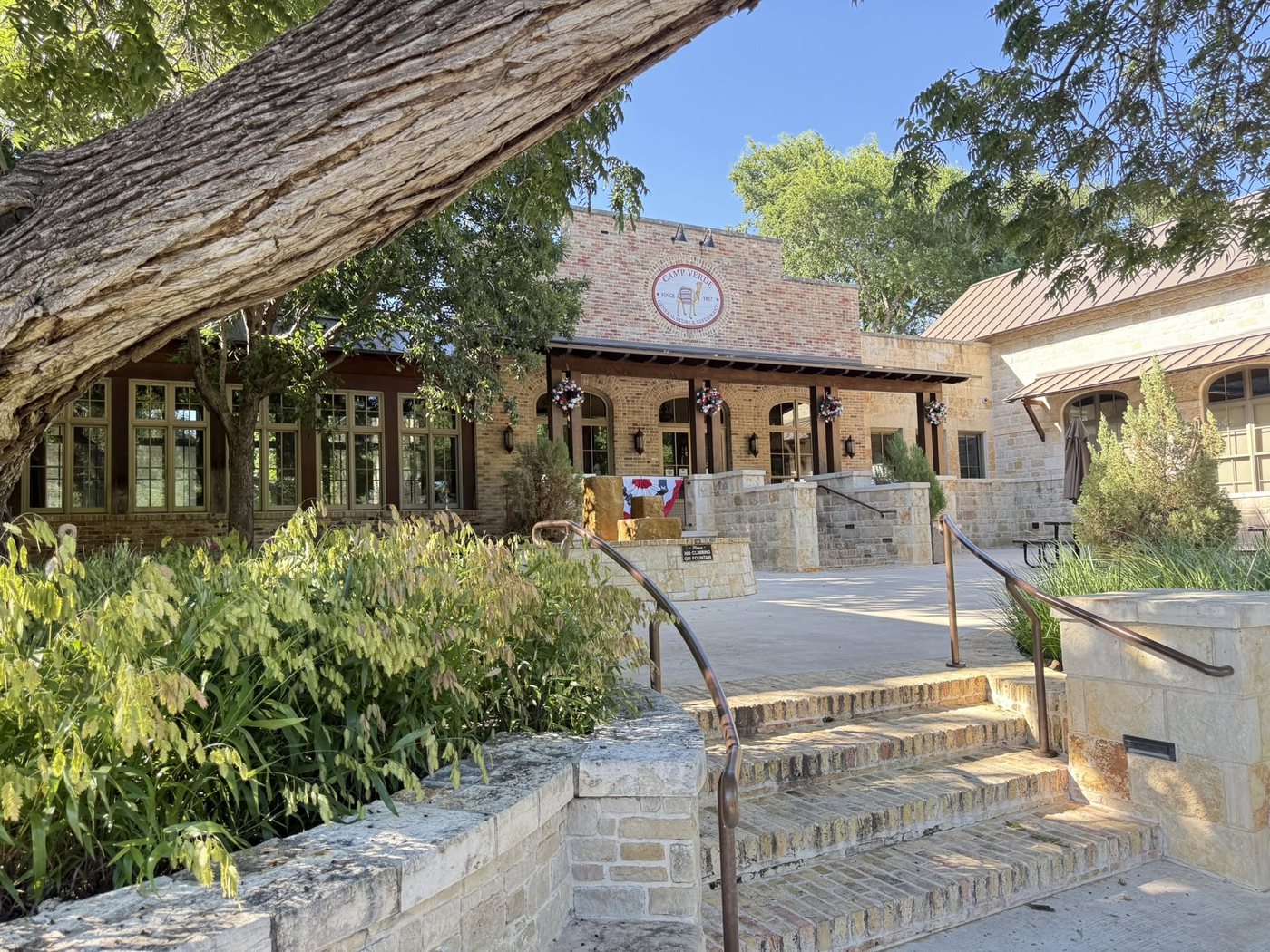
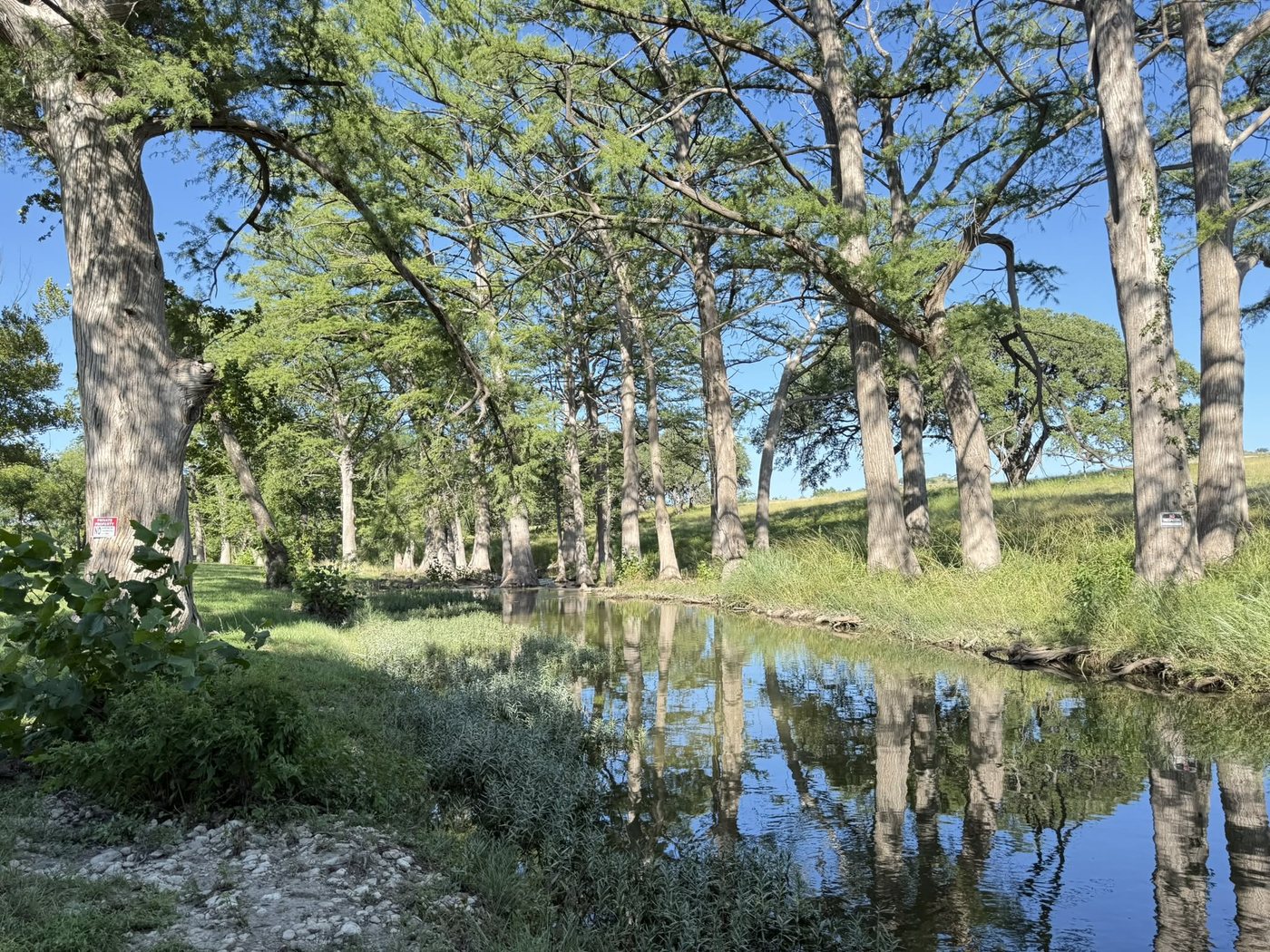
The Camp Verde General Store & Restaurant, the camel medallion on the sign, the ivy-covered gate, the old Toledo scale mounted on the porch wall — it’s all there. The food is worth the drive on its own — shaded patio under the trees, the kind of lunch that turns into two hours without you noticing. Verde Creek runs in front of it, slow and clear, cypress roots in the water, the kind of quiet that makes you forget what you were driving toward.
But the interesting part was the monument out front. Many people read the front — the U.S. Army camel experiment, the 1850s, the post established here to test whether camels could outperform horses in the Texas heat. The last line on the front ends mid-sentence: “Old U.S. Post Camp Verde was taken by —” and then a very small and faded “see other side” at the bottom of the monument. You have to walk around to the back to finish it. Many people probably don’t. What I didn’t know until Sunday is that the back tells a completely different story. The Confederates captured 80 camels when the Civil War started. Used them to haul cotton to Mexico to trade for supplies. A camel named Old Major was ridden by ladies around the parade grounds during post dances. Union prisoners held in the canyon nearby — cliffs described as “very difficult to ascend” — passed the time until one prisoner performed as a ventriloquist at a post dance, scaring the ladies with unseen pig sounds.
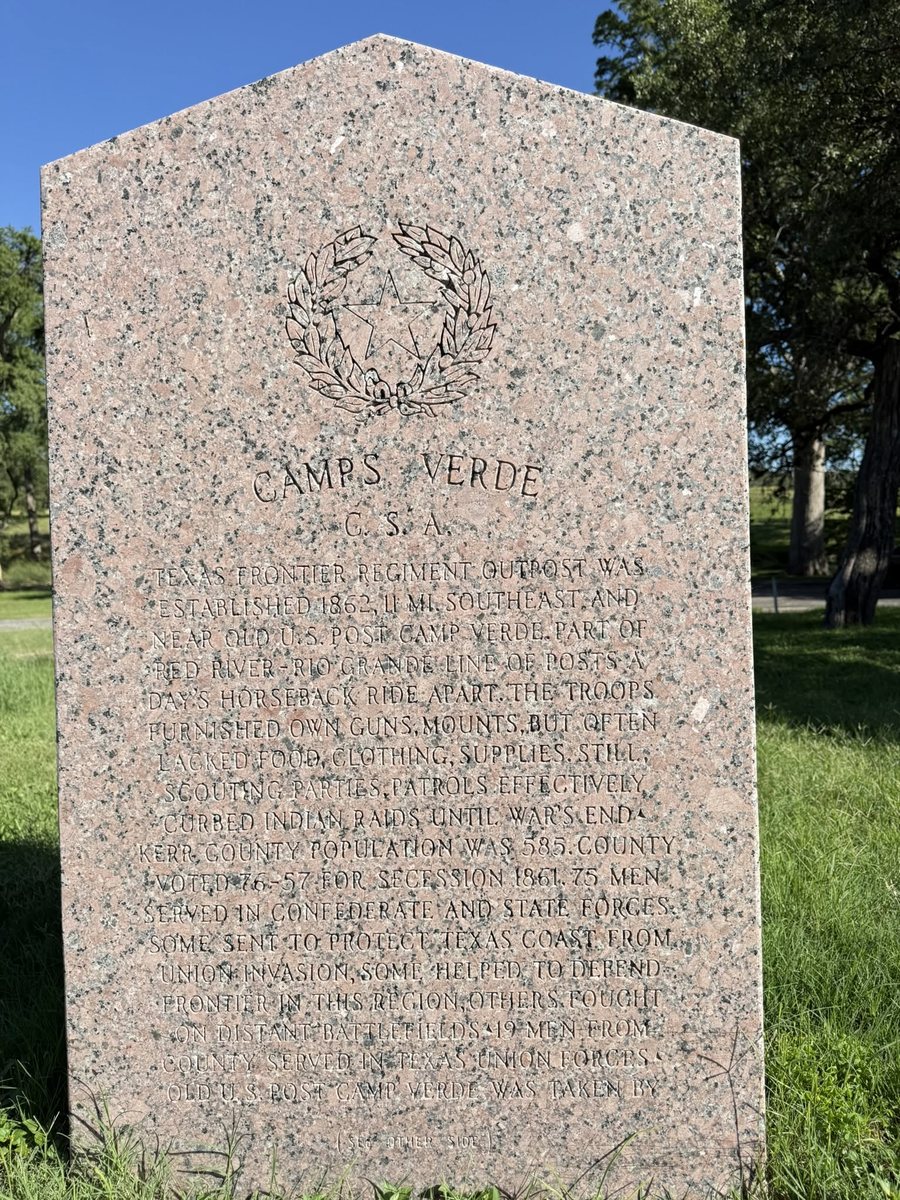
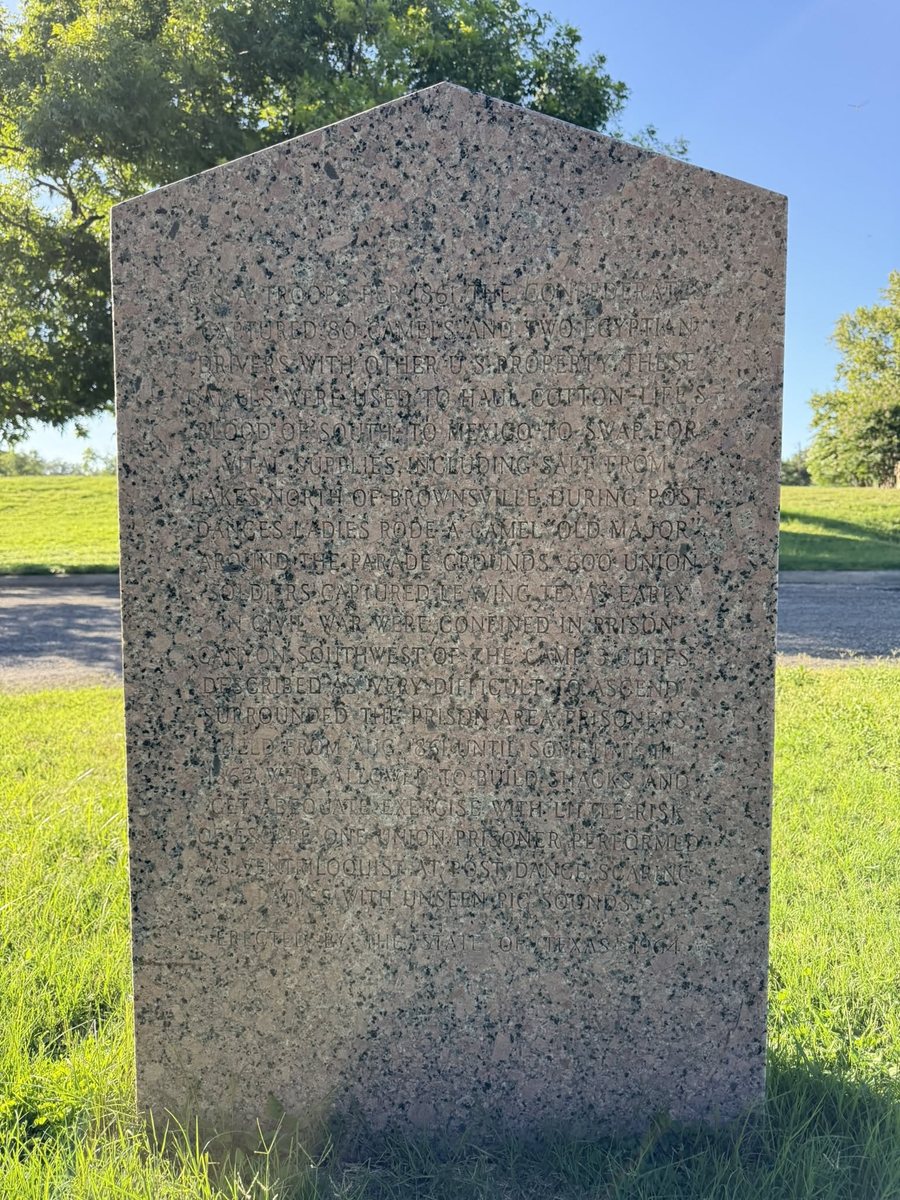
What the monument says
Transcribed from the photographs. The back is weathered, so a word or two may differ from the stone.
Front. CAMPS VERDE, C.S.A. Texas Frontier Regiment outpost was established 1862, 11 mi. southeast and near old U.S. post Camp Verde. Part of Red River–Rio Grande line of posts a day’s horseback ride apart. The troops furnished own guns, mounts, but often lacked food, clothing, supplies. Still, scouting parties, patrols effectively curbed Indian raids until war’s end. Kerr County population was 585. County voted 76–57 for secession 1861. 75 men served in Confederate and state forces. Some sent to protect Texas coast from Union invasion, some helped to defend frontier in this region, others fought on distant battlefields. 19 men from county served in Texas Union forces. Old U.S. post Camp Verde was taken by (see other side)
Back. C.S.A. troops Feb. 1861. The Confederates captured 80 camels and two Egyptian drivers with other U.S. property. These camels were used to haul cotton, life’s blood of South, to Mexico to swap for vital supplies including salt from lakes north of Brownsville. During post dances ladies rode a camel, “Old Major,” around the parade grounds. 600 Union soldiers captured leaving Texas early in Civil War were confined in Prison Canyon southwest of the camp. Cliffs described as “very difficult to ascend” surrounded the prison area. Prisoners, held from Aug. 1861 until sometime in 1862, were allowed to build shacks and get adequate exercise with little risk of escape. One Union prisoner performed as ventriloquist at post dance, scaring ladies with unseen pig sounds. Erected by the State of Texas, 1964.
About a mile away, the original headquarters site still stands. There’s a second monument there marking where the Army post itself was established — and just behind it, still standing under a canopy of old oaks, what appear to be the original buildings. A long, low barracks with a covered porch running its full length, and nearby, a second structure that matches descriptions of the officers’ quarters. Wire fence around the perimeter, green lawn, quiet. They look exactly like what a frontier outpost would become after more than 150 years of private use. Most drive-by visitors likely never find either one.
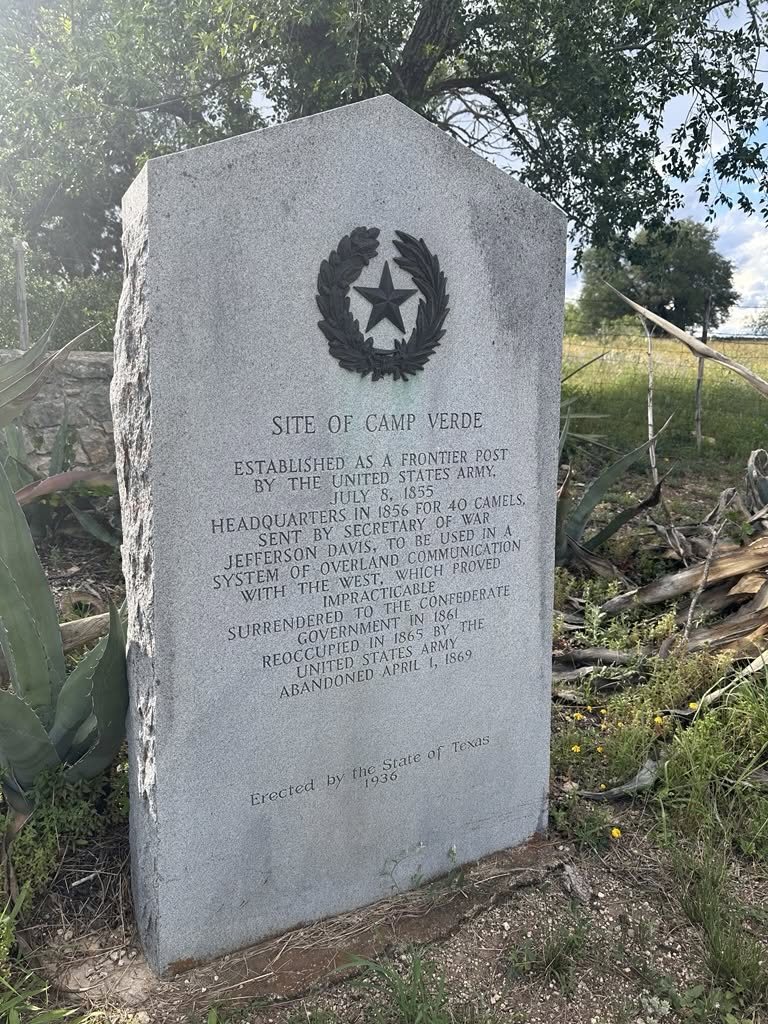
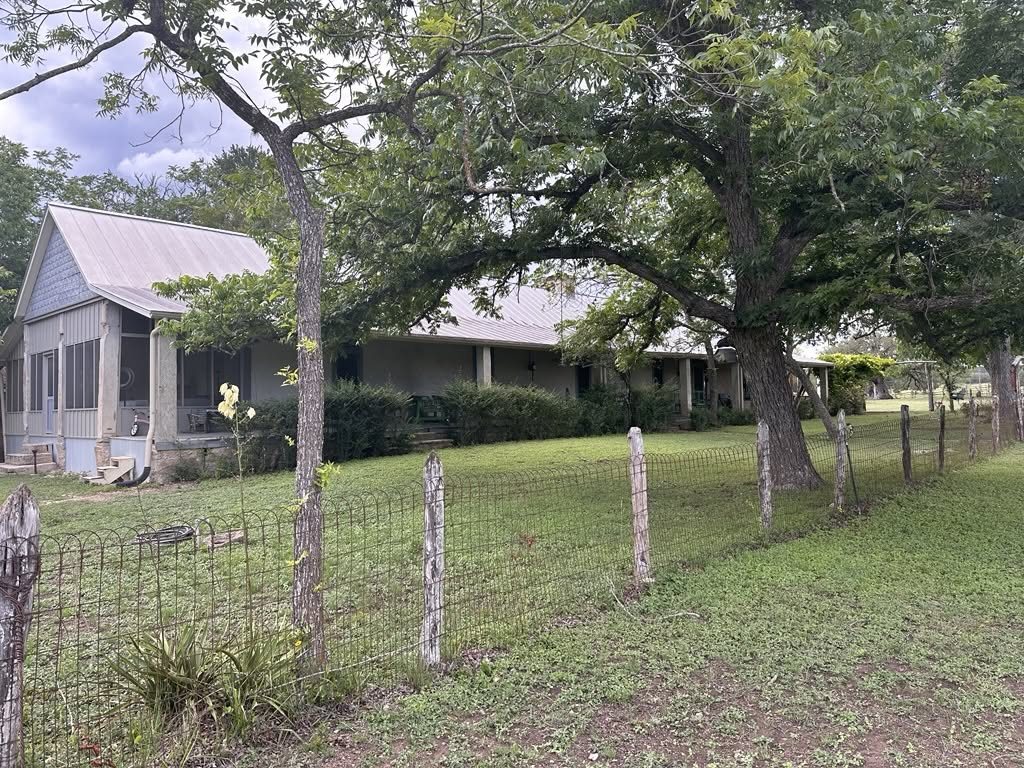
The 1936 marker. SITE OF CAMP VERDE. Established as a frontier post by the United States Army, July 8, 1855. Headquarters in 1856 for 40 camels, sent by Secretary of War Jefferson Davis, to be used in a system of overland communication with the West, which proved impracticable. Surrendered to the Confederate government in 1861. Reoccupied in 1865 by the United States Army. Abandoned April 1, 1869. Erected by the State of Texas, 1936.
If you’re looking for a day out here — eat at the restaurant, shop the general store, read both sides of the monument, drive down and see the old buildings, and you’re halfway between Bandera and Kerrville with the rest of the afternoon ahead of you.
Has anyone been out to the actual headquarters site? I’m curious whether the landowners have ever talked publicly about what’s still there. If you know something we missed, tell us. Accuracy matters to us.
Some places you have to visit twice before you’ve actually seen them once.
Correction: an earlier version gave a year for the general store building’s age, and it was wrong. A flood in 1900 destroyed the original buildings; the store standing today was built afterward.
Go see it. Highway 173 south of Kerrville. The headquarters buildings are on private land; see them from the road. Camp Verde guide · Camps Verde C.S.A. marker · Kerrville