Hill Country/Cowboy Country/Bandera
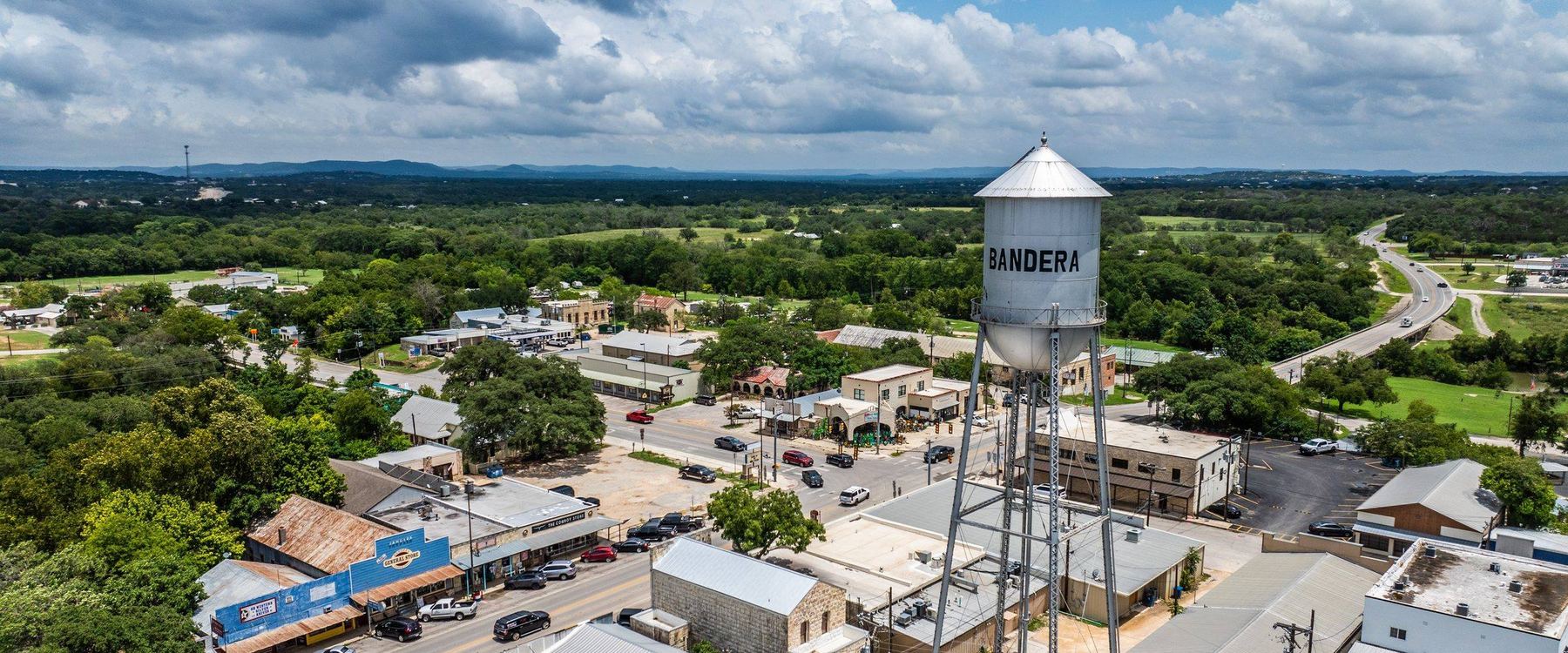

The Cowboy Capital of the World — 170 years of cattle drives, dude ranches, and honky-tonks that have never stopped operating.
Ask Brody
Your guide to Bandera and Cowboy Country.
Which outfits run trail rides, where the river crossings are, which nights have music on Main.
Bandera is a town of roughly 924 people in Bandera County, Texas, sitting at 1,243 feet elevation along the Medina River in the Texas Hill Country. It is located 53 miles northwest of San Antonio via Interstate 10 and Texas Highway 16. For most Texans — and increasingly for visitors from around the world — Bandera is known by one title: the Cowboy Capital of the World. That is not a marketing slogan invented by a tourism board. It is a designation earned across 170 years of cattle drives, rodeos, dude ranches, and honky-tonks that have never stopped operating.
The Cowboy Identity
Bandera's claim to the cowboy title is rooted in verifiable history. In the years following the Civil War, the town served as a crucial staging area for the Great Western Cattle Trail — the route that sent millions of longhorns north from Texas to the railheads in Dodge City, Kansas. Cowboys gathered here, outfitted here, and rode north from here. That era transformed Bandera from a sawmill settlement into a frontier town defined by the cattle trade.
When the trail drives ended, the cowboy culture did not leave. It evolved. By the 1920s, Bandera had reinvented itself around dude ranches — working guest ranches where city folks could come ride horses, sleep under the stars, and live the cowboy life for a week. That tradition continues today with operations like the Dixie Dude Ranch (operating since 1937), the Flying L Guest Ranch, and the Mayan Dude Ranch. These are not theme parks. They are working ranches that happen to take guests.
Walk through Bandera on any given day and you will see people in spurs and chaps who are not costumed performers — they are heading back to a working ranch. Horses are still hitched outside bars. The rodeo arena is not a relic; it hosts professional events multiple times a year.
The Polish Connection
What most visitors do not know is that Bandera's founding story is not purely Anglo-Texan. The town was formally laid out in 1853 by John James and Charles de Montel, who established a water-powered cypress sawmill on the Medina River. But in 1855, sixteen Polish families from Upper Silesia arrived to work the mill. These immigrants established St. Stanislaus Parish — the second-oldest Polish Catholic parish in the United States. Their descendants still live in the area, and the parish still holds services. This Polish-Texan thread is a quiet but important part of Bandera's identity, visible in family names, the historic church, and occasional polka nights that share the calendar with country-western dances.
The Honky-Tonk Scene
Bandera has more live music venues per capita than almost anywhere in Texas outside of Austin. The difference is that these are not curated music halls — they are honky-tonks in the truest sense.
The music here is not "Nashville country." It is Texas dance-hall country, Western swing, and honky-tonk — the kind of music that exists to be danced to, not listened to passively.
The Medina River
The Medina River is Bandera's backyard. It winds through town beneath towering bald cypress trees, offering some of the most accessible and scenic river recreation in the Hill Country. Unlike the Frio or Guadalupe, the Medina is rarely overcrowded. Locals tube it, kayak it, swim in it, and fish it. Bandera City Park provides free public access with picnic areas and shallow wading spots perfect for families.
The river also defines the town's geography — most of Bandera's commercial district sits on the north bank, while residential neighborhoods and ranches spread out on both sides into the surrounding hills.
Outdoor and Nature
Beyond the river, Bandera is a gateway to serious Hill Country wilderness:
Bandera County is also one of the top horseback riding destinations in Texas. Multiple outfitters offer trail rides ranging from one-hour jaunts to multi-day pack trips into the backcountry.
Where to Stay in Bandera
From riverfront cabins on the Medina to working-ranch stays and cozy downtown cottages, Bandera is home base for the cowboy Hill Country. Backroads Hill Country manages hand-selected vacation rentals in and around Bandera — and has managed properties here since 2001.
Practical Information
Getting there: From San Antonio, take I-10 West to TX-16 North. About one hour. From Austin, take US-290 West to TX-16 South through Kerrville — about 1.5 hours but scenic.
Crowds: Bandera is busiest on major event weekends (Cowboy Mardi Gras, Memorial Day, Labor Day). Highway 16 backs up during these times — arrive early or take back roads.
Cash: Many smaller venues, cover charges at honky-tonks, and some food trucks are cash-only or cash-preferred. ATMs are available but carry some bills.
Pace: Things move slowly here. Shops may not open exactly on time. The bartender might be out back. This is not a bug — it is the feature.
Why It Matters for the Hill Country
Bandera represents something increasingly rare: a Texas town that has not been polished into a tourism product. The cowboy culture is not curated for visitors — it simply never stopped. The dude ranches are not "experiences" designed by consultants — they are multi-generational family operations. The honky-tonks do not have cover bands playing Top 40 — they have local musicians playing the same style of music that has echoed off these walls for 70 years. In a Hill Country that is rapidly gentrifying, Bandera remains defiantly, authentically itself.
Things to do
15 places in and around Bandera.
Nothing in that category here yet.
Stays in Bandera
47 Backroads-managed houses in Bandera.
of 97 across the Hill Country
Nearby
The rest of Brody’s territory.